|
| Comedién (Pantalone) - Rembrandt Harmensz. van Rijn (1606-1669) |
|
At times it's pretty sweet to be living in Amsterdam. Not in the last place because there are so many awesome museums available. Although today quite a few are (partially) closed for renovations. Luckily
The Rembrandt House is not one of them. This museum is located in the house where Rembrandt actually lived and worked for nearly twenty years. In the house are many paintings but only a few are by Rembrandt himself, they do have a very large collection of Rembrandt's drawings and etches.
Rembrandt might be best known for his paintings but he also made fantastic drawings and etches. As a draftsman I am always very attracted to this side of the great master's work. Right now there is an exhibition at the Rembrandt House called Drawing in Rembrandt's Day. The museum also organizes a workshop focusing on seventeenth century drawing techniques. Yesterday I had the chance to join one of those workshops.
At the beginnning of the workshop we were told about the different materials artists used to draw with in the time of Rembrandt. They used charcoal, graphite, crayons, as well as inks and ink washes. The ink they used is called
Bistre Ink and has this wonderful brown color to it. They used brushes and pens made out of reed. Rembrandt also was fond of using a goose quill pen. At the workshop there were only a few quill pens, but luckily most other people there were happy to use the other pens and skewers that were offerd, so I got to use one of the quills throughout the workshop.
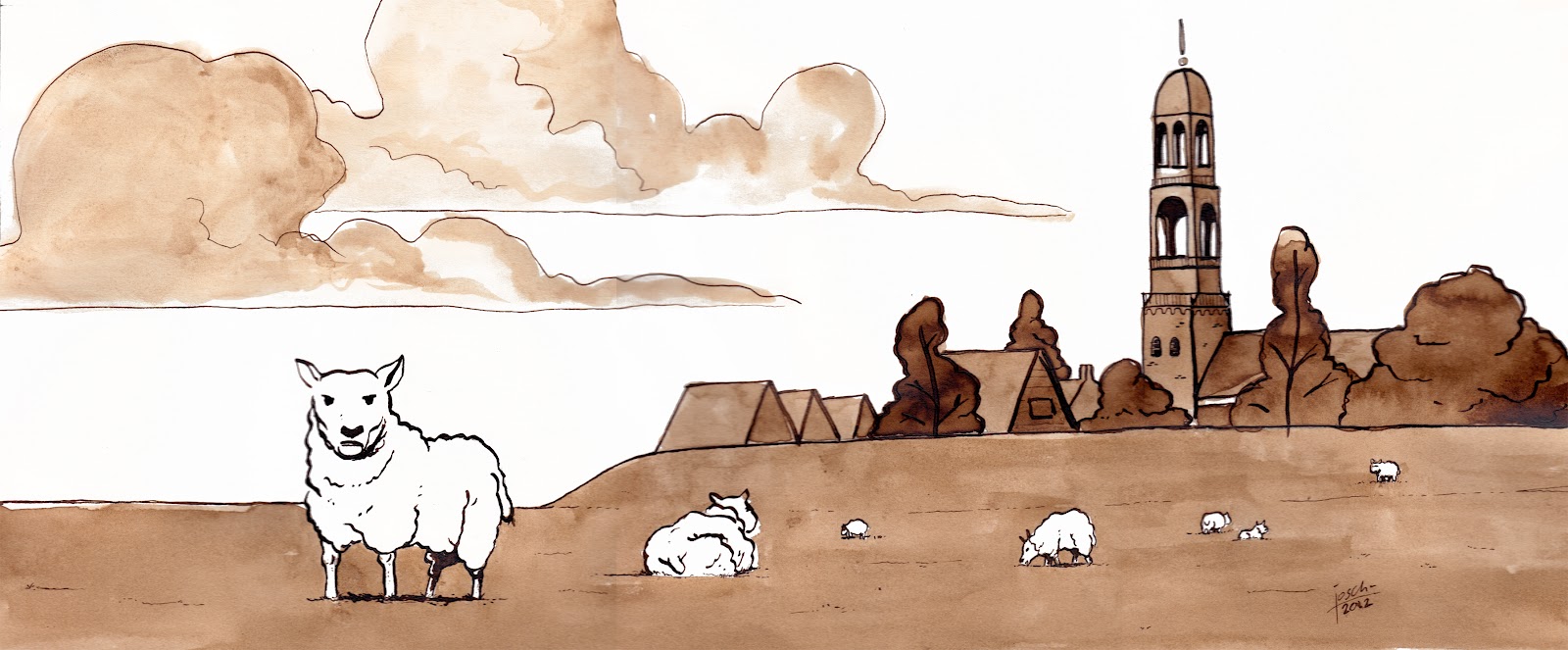
The image above is a smaller sketch paper that I used to try the different materials, we were encouraged to test the way different tecniques and materials could be combined. After we had messed about a little we were given a large sheet of paper and were given a photo we could use as inspiration. I chose a picture of a church and set to work: setting tones with a brush, and adding details with the quill pen.
I am always trying to work very controlled and I had fun using the bistre ink because it forced me to let go a little. I wish we had had more time! Apparantly bistre ink is still for sale today and I really want to get some of it to do more drawings like these. The quill actually worked really nice but I think that a regular dip pen would work just as well. (I will probably
not make my own quill pen, it's rather complicated: you have to cook the quill and then have to cut it with a razor blade)
This is the final drawing I did. It's not completely finshed. I would have liked to add a little more detail. Still it shows the nice effect of the ink washes and especially at the tower you can see the loose lines of the quill pen.
After we had cleaned the brushes we went back to the museum and looked at the exhibition. Looking at these drawings after just having used the same material changed my perception. To show you what Rembrandt did with the same material I posted a drawing that was part of the exhibition, at the top of this article. If you look carefully you can see that he made a correction to the guys arm (screen right), he drew it in line first and then chanced the shape with a brush to enhance the gesture.